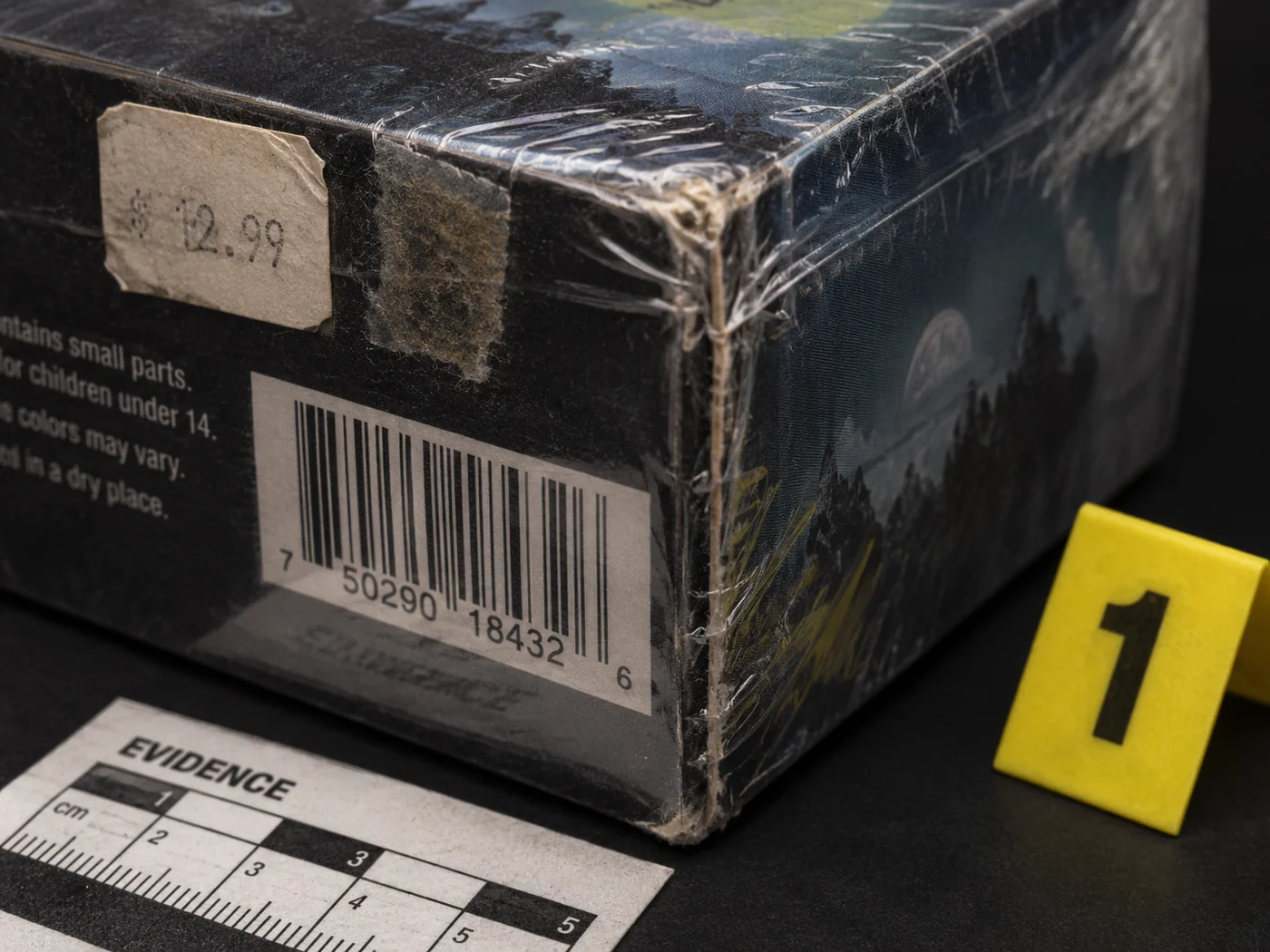
NeverOpened treats packaging as evidence. The goal is to preserve information before making an irreversible change.
Start with the packaging method, not the plastic
Some genuine unopened products used shrink, some tape, some glue, some blister sealing, and some no external wrap at all. A “factory seal” only makes sense relative to that product, publisher and era.
Look for internal consistency
Fold geometry, seam placement, tape width, label aging, wear and graphics should tell one coherent story. A pristine strip of tape on a heavily abraded box is a question worth documenting.
Treat anomalies as questions
Dust under wrap, double seams, lifted tape and adhesive residue can be meaningful, but manufacturing variation and old retail handling also create oddities. Record the observation before jumping to a verdict.
Use provenance
An original receipt, case origin, old collection photograph or long-term ownership history can strengthen the evidence trail even when it cannot independently authenticate the item.